First Time at the Table #5 — How to Read Your Own Hand: Do I Have a Good Hand Right Now?
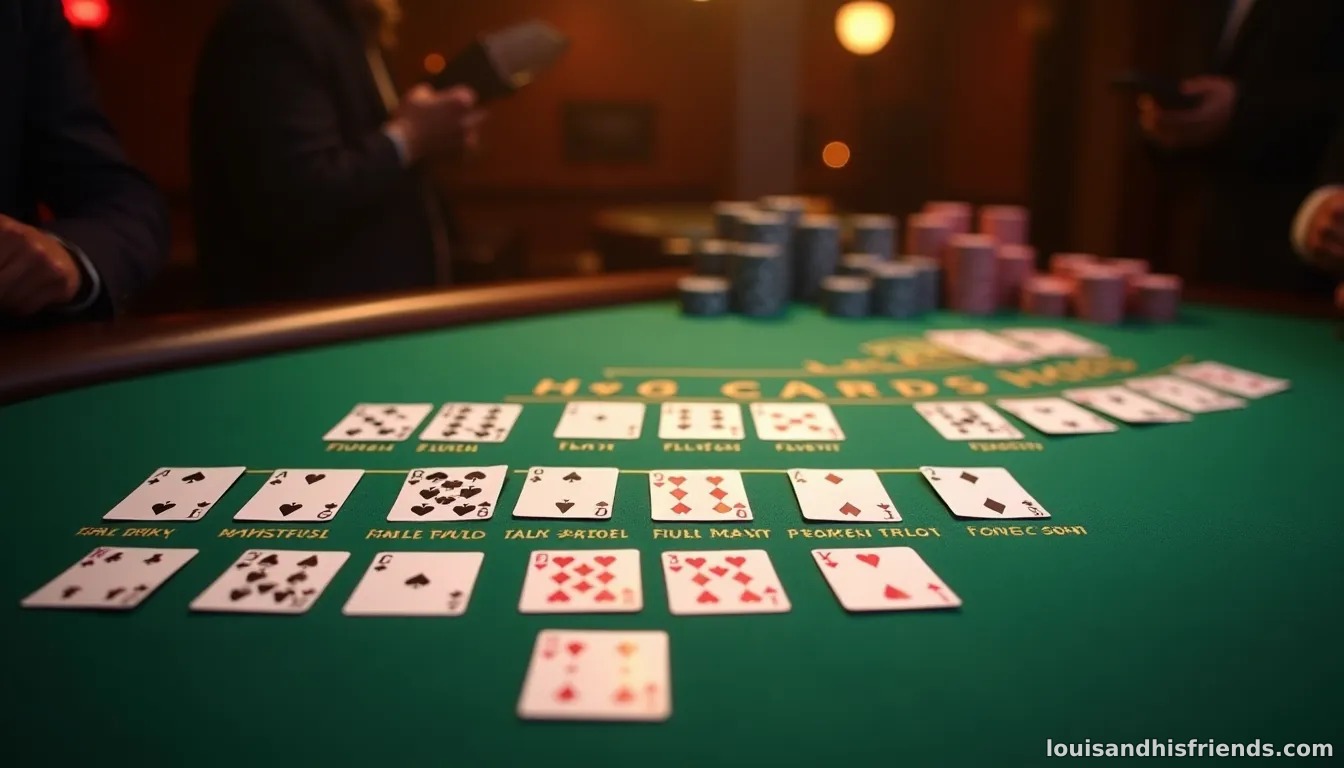
If you're new to Texas Hold'em, the most common question at the start of every hand is: "Do I have a good hand?" The answer depends on more than just the two cards you hold. This lesson will teach you how to quickly categorize your hand based on its strength and how to make basic preflop decisions. As covered in our position series, your seat at the table also affects what qualifies as a "good hand."
Why Hand Strength Matters
Reading helps, but hands-on repetition sticks. Practice this idea at casual tables on Louis & Friends using free virtual chips — no purchase required for the learning tables.
You cannot make sound decisions without first knowing the relative strength of your two hole cards. Beginners often put chips in with weak hands because they look "pretty" (like A♣ 6♣) without understanding that they are easily dominated. A good hand is one that has a high probability of being the best hand before any community cards appear or one that can become very strong on later streets. Being able to quickly classify your hand lets you decide whether to put chips in or fold before you see the flop.
Hand Strength Categories
Premium Hands (Score 9-10 out of 10)
These are the strongest starting hands and you should almost always put chips in when you have them. They include: A♠ A♣, K♦ K♥, Q♠ Q♦, and A♣ K♠ (suited or not). With these hands, your goal is to build the pot. You will often have the best hand before the flop and can continue to play aggressively after the flop.
Medium Hands (Score 7-8 out of 10)
Hands like J♣ J♦, T♠ T♥, A♠ Q♦, and K♣ Q♣ fall into this category. They are strong but vulnerable. Against an opponent who puts in a large number of chips, you should be cautious. For example, A♠ Q♦ looks great, but if someone puts in another big raise, they might have A♣ K♠. Medium hands become much better in late position (button or cutoff) where you can see how many opponents act before you.
Suited Connectors and Speculative Hands (Score 5-6 out of 10)
These are hands like 7♠ 8♠, J♠ T♠, or 6♣ 7♣. They do not have immediate high-card value, but they have excellent potential to make straights and flushes. You should only put chips in with these hands when you are in late position or when you can see the flop cheaply from the blinds. The key is to not overvalue them — they are often drawing hands.
Weak Hands (Score 3-4 out of 10)
Examples: A♠ 4♦, K♥ 7♣, Q♣ 3♣. These hands should almost always be folded, especially in early position. Beginners often call with any Ace, but that is a quick way to lose practice chips. The only exception might be from the big blind when everyone has folded and you see a free flop.
Worked Example: You Hold J♠ T♠ in Late Position
Let's walk through a complete hand to see how hand strength evaluation works in practice.
Preflop: You are on the button (BTN). Everyone folds to you. You look down at J♠ T♠. This is a suited connector (middling strength). Because you are in late position, you can play it. You put in two big blinds worth of chips. The small blind folds, and the big blind calls.
Flop: K♠ Q♦ 2♣. The big blind checks to you. You now have an open-ended straight draw (any 9 or A gives you a straight) and also a flush draw (two more spades make a flush). This hand has improved dramatically! On the flop, your hand is now very strong because you have multiple ways to win. You should put more chips in to build the pot and possibly win immediately if the opponent folds. In this spot, you choose to place a continuation bet of about 75% of the pot.
Turn: The big blind calls. Turn card is 4♦. No change to your draws. You now have a powerful drawing hand. You decide to slow down slightly and check, keeping the pot manageable. The big blind also checks.
River: The river is A♠. You have made a straight (J♠-T♠-K♠-Q♦-A♠ all same suit? Actually A♠ completes the flush as well, so you have a flush). You now have a very strong hand. You put chips in again, and the big blind calls, showing K♣ 2♠ for two pair. You win the pot.
Key takeaway: Knowing your hand strength at each stage let you make correct decisions. Preflop, J♠ T♠ was medium; on the flop it became strong (drawing); on the river it became very strong. Always re-evaluate after each community card.
Common Mistakes for Beginners
- Overvaluing Ace-rag – A♠ 4♣ looks good because of the Ace, but it is easily dominated. Fold it from early and middle positions.
- Calling too much with small pairs – 2♦ 2♥ is worth a call if you can see the flop cheaply, but you should not put many chips in with them unless you hit a set.
- Not adjusting hand value based on position – A hand like K♣ Q♥ is strong in late position but playable cautiously in early position. Beginners often play the same way from any seat.
- Falling in love with suited cards – Suited does not automatically make a hand good. 9♠ 2♠ is still a terrible hand.
Practice Tip
The best way to learn hand evaluation is practice. OpenClaw offers a free social Texas Hold'em environment where you can play in the browser with no download required. Set up a private room with friends using practice chips and focus on deciding whether your hand is premium, medium, speculative, or weak before every action. After each hand, discuss your reasoning. Over time, this quick classification will become automatic.
Ready to try? Join a free practice table today and start reading your hands like a pro!