Quick Answer #13 — What Is a Kicker? When Kickers Decide the Winner
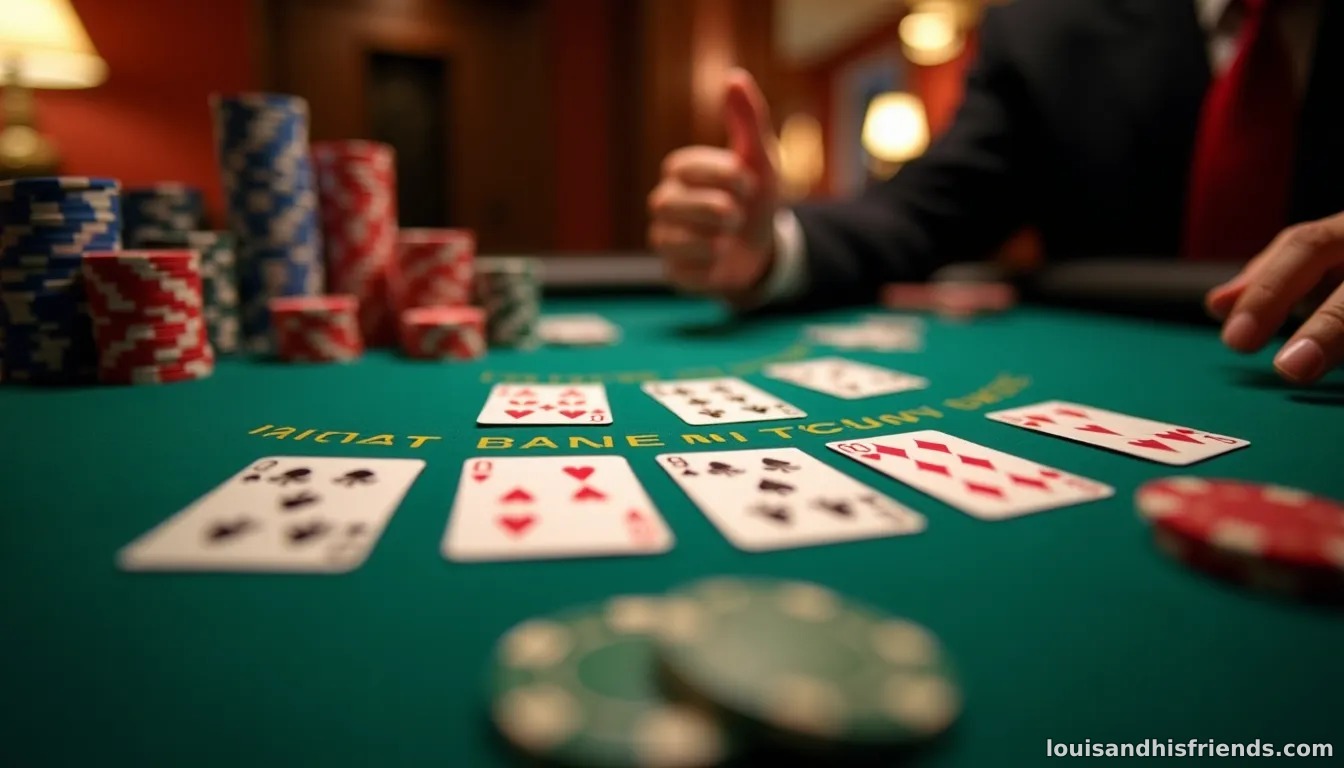
Understanding the Kicker: The Tiebreaker That Matters
Reading helps, but hands-on repetition sticks. Practice this idea at casual tables on Louis & Friends using free virtual chips — no purchase required for the learning tables.
In Texas Hold'em, many pots are decided not by the main hand rank but by a single unpaired card known as the kicker. For beginners, the kicker is one of the most overlooked concepts, yet it can flip a winning hand into a losing one in an instant. This quick answer explains what a kicker is, when it matters, and how to use this knowledge to improve your results in social Texas Hold'em with friends.
What Exactly Is a Kicker?
A kicker is any card in your five‑card hand that does not contribute to the hand’s primary rank. For example, if you hold A♠ Q♥ and the board is Q♣ 7♠ 3♦ 2♥ 8♠, your best hand is a pair of Queens with an Ace kicker. The Ace is the kicker — it’s the highest card that doesn’t help make the pair. If your opponent holds K♠ Q♦, you both have the same pair of Queens, but your Ace kicker beats their King kicker.
In poker hand rankings, kickers are only relevant when two or more players tie on the main hand rank. The higher the kicker, the better. Understanding this helps you avoid throwing away chips on hands that look strong but have weak kickers.
When Kickers Come Into Play
Kickers matter in several common situations:
- One pair: Both players have the same pair; the higher side card (or cards) wins. If the first kicker ties, compare the second, then the third.
- Two pair: If both players have the same two pair (e.g., Aces and Kings), the fifth card (the kicker) decides the winner.
- High card: Every card in the hand is a kicker. The highest unmatched card wins first, then the next, etc.
- Four of a kind: Very rare, but if both players have the same four of a kind (e.g., four 9s), the fifth card (kicker) decides.
A common beginner mistake is to assume that having “a pair” always means a strong hand. In reality, a low pair with a weak kicker can easily be outdrawn or outkicked.
Common Kicker Mistakes Beginners Make
- Playing weak‑kicker hands like A♠ 2♣ or K♠ 3♠. If the flop pairs your small kicker, you’re often beaten by players holding the same pair with a higher kicker.
- Ignoring the kicker when you flop top pair. If you hold K♦ 7♠ and the flop comes K♠ J♦ 4♣, you have top pair but a weak kicker. Any opponent with a King and a higher side card (A, Q, J) has you beat.
- Overvaluing an Ace kicker in every spot. An Ace kicker is strong, but it loses value when the board pairs lower cards and your opponent holds a pocket pair that improves to a set.
- Forgetting that kickers stack. In a high‑card hand, if both players have Ace‑high, the next card decides — so A♠ K♥ is much stronger than A♠ T♣ against most opponents.
Worked Example: The Kicker Decides the Pot
Let’s walk through a real hand to see the kicker in action. You are in late position with A♠ Q♥. Your opponent in the big blind holds K♠ Q♦. The board runs out Q♣ 7♠ 3♦ 2♥ 8♠.
Both of you have a pair of Queens. Your hand is A♠ Q♥ Q♣ 8♠ 7♠ (pair of Queens, Ace kicker, Eight, Seven). Your opponent’s best five cards are K♠ Q♦ Q♣ 8♠ 7♠ (pair of Queens, King kicker, Eight, Seven). Compare the kicker: Ace beats King. You win the pot.
Why this matters: If you had played the same hand with a weaker kicker (say A♠ T♣ instead of A♠ Q♥) and the board had a King, you would lose to the opponent’s King kicker. Always consider the kicker when you put chips in the pot.
How to Use Kicker Information in Your Strategy
Knowing about kickers improves both your pre‑flop and post‑flop decisions:
- Pre‑flop: Prioritize hands with high kickers. A♠ K♥ is far stronger than A♠ 2♣. Suited connectors like J♠ T♠ have weaker kickers but offer straight and flush potential.
- Post‑flop: When you flop top pair, evaluate your kicker. If you hold K♠ 2♣ and the flop is K♥ 8♦ 3♠, your weak kicker means you should be cautious — any opponent with a King and a better side card has you outkicked.
- Raising and calling: Before you add chips to the pot, ask yourself: “If I face the same hand with a different kicker, am I ahead?” If the answer is no, consider folding unless you have drawing potential.
Practice Tip: Test Your Kicker Awareness
The best way to internalize kicker concepts is to play hands in a low‑pressure setting. Set up a private room with friends using nothing but practice chips. Focus on hands where kickers matter—for example, when you hold a middle pair on a dry board. Practice evaluating your kicker before you place chips. You can start a free practice game directly in your browser, with no download required. Social Texas Hold'em is a great way to build skill while having fun with people you trust.
Remember, kickers often decide the winner in hands that seem close. By mastering this simple tiebreaker, you’ll avoid costly errors and make smarter decisions every time you sit down to play. Try these ideas in a free practice session today — the OpenClaw app makes it easy to practice kicker awareness with friends.