Board Reading School #5 — River Play: Value Bet, Check, or Bluff?
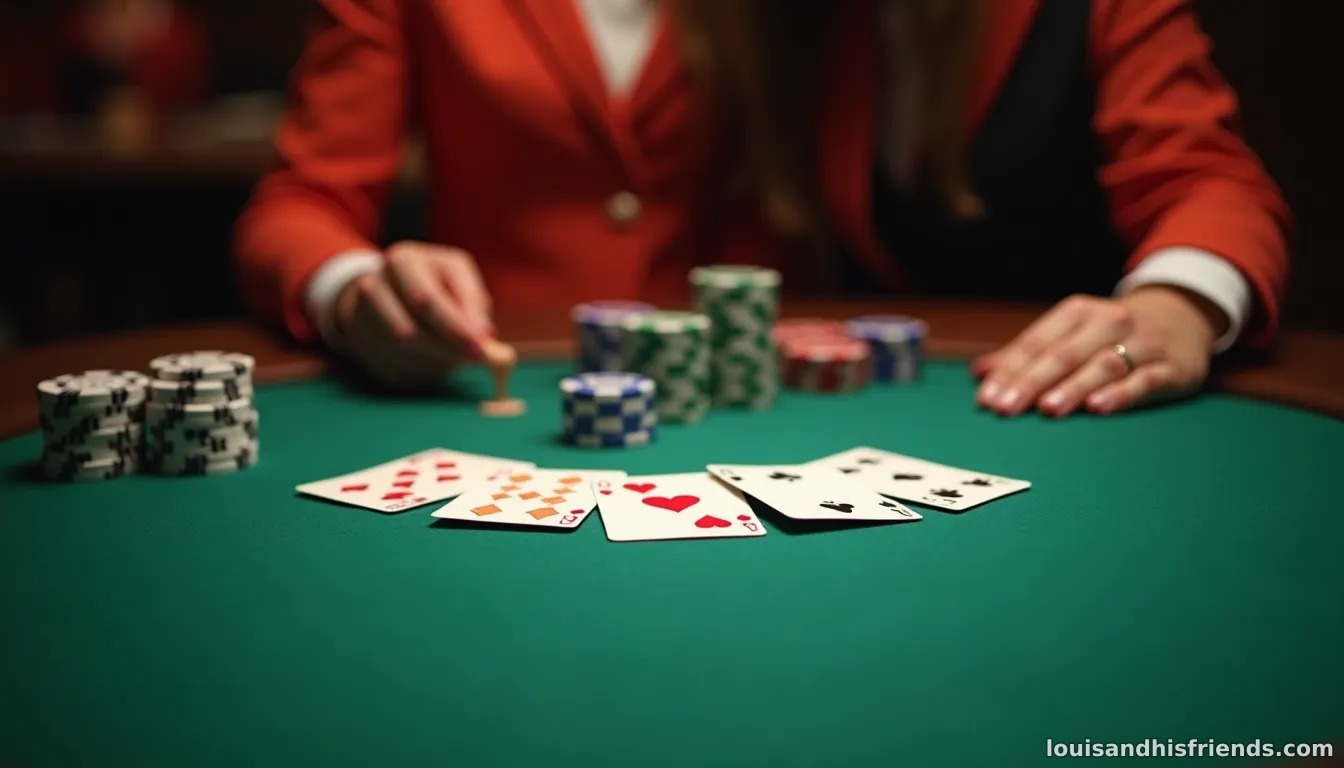
Introduction: The River Is the Final Test
Reading helps, but hands-on repetition sticks. Practice this idea at casual tables on Louis & Friends using free virtual chips — no purchase required for the learning tables.
The river is the last opportunity to add chips to the pot. Every hand reaches this point, and your decision can turn a winning hand into a bigger pot or salvage a lost one. In this fifth lesson of the Board Reading School series, we focus specifically on three river actions: value betting, checking, and bluffing. By understanding when to choose each, you'll avoid common beginner mistakes and improve your results in social Texas Hold'em.
As we covered in earlier lessons, position and board texture play a huge role. But on the river, hand strength and opponent tendencies become even more critical. Let's break down each option.
The River Decision Framework
Before acting on the river, ask yourself three questions:
- Do I have a strong hand? If your hand is likely the best, consider putting chips in for value.
- Can my opponent call with worse? Even a strong hand is only worth a value bet if weaker hands will put chips in.
- Can my opponent fold a better hand? That is the essence of a bluff — getting a stronger hand to fold.
Your answer determines whether you should add chips, check, or bluff.
When to Value Bet
A value bet occurs when you believe you have the best hand and want to get paid by weaker hands. On the river, value bets work best when:
- The board is relatively dry (no obvious draws completed). Opponents with pairs will likely call.
- Your hand is strong but not invulnerable. For example, top pair with a good kicker on a board with no flush or straight possible.
- Your opponent has shown weakness by checking or calling without raising.
Example: You hold K♣ Q♣. The board is K♥ 8♦ 2♣ 7♠ 3♥. You have top pair. Your opponent checks on the river. Many weaker hands — like QJ, JT, or middle pairs — will call a moderate amount of chips. A value bet of about half the pot is wise.
When to Check (and Sometimes Fold)
Checking on the river is correct when:
- Your hand is marginal and cannot stand a raise. For example, second pair or a missed draw that has no bluff potential.
- The board is very scary — four to a straight or flush — and your opponent likely improved.
- You want to see a showdown cheaply with a hand that might win if opponent also checks.
If you check and your opponent puts chips in, you must decide whether to call. With a weak hand, folding is often correct unless the pot odds are very attractive.
When to Bluff
Bluffing on the river requires careful reading. A good bluff candidate has:
- No showdown value — your hand cannot win if you check (e.g., a missed draw).
- A believable story — the board suggests you might have made the draw you are representing.
- An opponent who can fold — someone who has shown they are not committed to the pot.
Example: You hold A♠ 5♠. The board is J♠ 9♠ 4♣ 3♦ 2♣. You missed your flush. Your opponent checked on the river. If you check, you lose unless your opponent also has nothing. A small bluff (about half the pot) may force him to fold weak pairs like 77 or 88. However, if your opponent called on the turn, he probably has a real hand, so bluffing becomes risky.
Worked Hand Example
Hero is in late position holding T♠ T♣. The flop comes 9♥ 8♦ 2♣. Hero and both blinds see it. Hero adds chips to the pot, one blind calls. Turn is 4♠. Both check. River is J♣. The blind checks again.
Analysis: Hero has an overpair (tens) on a relatively coordinated board. The river Jack could complete a straight (if opponent holds QJ or T7), but many hands missed. The opponent's check on the turn and river suggests weakness. Hero's hand has decent showdown value but is vulnerable. Should hero add chips?
Recommended action: Place a value bet of about 40-50% of the pot. If the opponent folds, you win. If he calls, you often beat lower pairs or draws. Only if he raises should you fold, as that indicates a strong hand. By checking, you risk letting your opponent win with a weaker hand that would have called a bet.
Common Mistakes on the River
- Checking too often with value hands — afraid of being raised, beginners miss chips by not betting when they are ahead.
- Bluffing into calling stations — if your opponent rarely folds, never bluff; just value bet when you have it.
- Overvaluing thin value — betting with a weak top pair on a four-straight board may get raised off the hand.
- Ignoring position — being out of position on the river makes it harder to control pot size; check more often.
- Failing to notice bet sizing tells — consistent bet sizing patterns (e.g., always half-pot) give information to observant opponents.
Practice Tip
The best way to master river decisions is through free practice. OpenClaw offers a way to play with friends in a private room using virtual chips — no download required. Gather a few friends for a casual social Texas Hold'em session and focus on river plays. For each hand, pause before your river action and mentally answer the three decision questions. Over time, you'll develop an instinct for when to value bet, check, or bluff.
Start a free practice game now at Louis & Friends — play in the browser with no download needed, perfect for honing this skill in a relaxed environment.
Casual practice with free virtual chips — solidify what you read above.
Start Practicing