Position Masterclass #3 — Early Position: Playing Tight from UTG
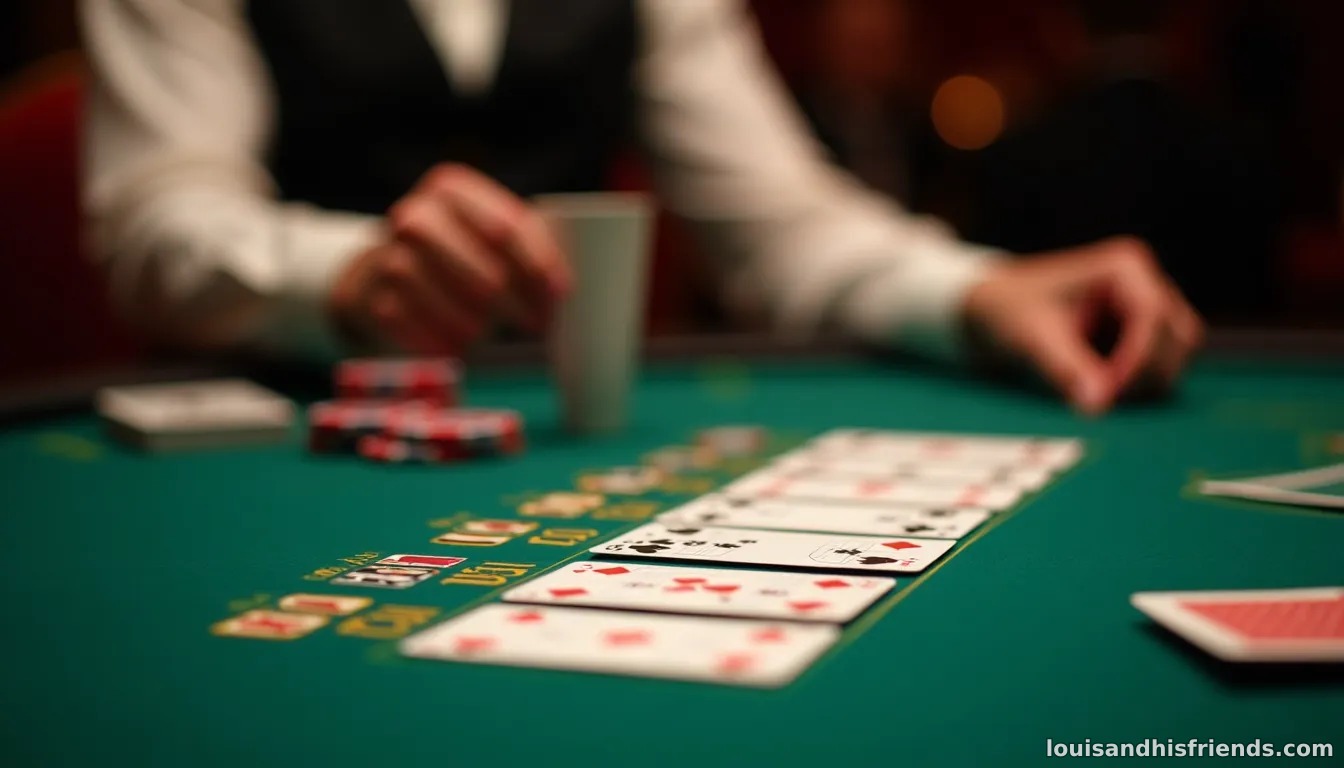
Early position, especially UTG (Under the Gun), is the toughest seat at the poker table. You act first before the flop and first on every street afterward. Because you have less information about your opponents' intentions, the smartest approach is to play tight — only entering the pot with strong hands. This lesson will explain exactly what tight UTG play looks like, give you a recommended opening range, and walk through a real hand to show how it works.
【视频:Early Position Basics Video】
The Challenge of Early Position in Texas Hold'em
Reading helps, but hands-on repetition sticks. Practice this idea at casual tables on Louis & Friends using free virtual chips — no purchase required for the learning tables.
UTG has two major disadvantages:
- Information disadvantage — you must act before everyone else, so you don't know if someone behind holds a monster hand.
- Positional disadvantage — after the flop, you again act first, making it harder to control the pot or bluff effectively.
These factors mean that many hands that are profitable in later positions become losing plays from UTG. A tight range protects you from being trapped by stronger hands or forced into difficult decisions out of position.
What Does "Playing Tight" Mean?
Playing tight means only putting chips into the pot with a small, premium selection of starting hands. A typical full-ring (9-handed) UTG opening range includes:
| Hand Type | Example Hands |
|---|---|
| High pocket pairs | AA, KK, QQ, JJ, TT |
| Medium pocket pairs | 99, 88, 77 (sometimes) |
| Strong aces | AKs, AKo, AQs, AQo (sometimes), AJs |
| Strong broadways | KQs, KQo (sometimes) |
This range represents roughly the top 10-12% of all possible starting hands. It's intentionally narrow to avoid being dominated by re-raises or forced into tough post-flop spots.
【视频:UTG Starting Range Visual Guide】
Worked Example: You Are UTG with A♠ Q♣
Scenario: Full-ring game, blinds are 100/200. You are UTG with A♠ Q♣. You decide to raise to 600 (3x big blind). Action folds to the big blind, who calls.
Flop: K♦ T♠ 2♥
You have no pair (only overcards) and no strong draw. The flop connects with many hands the big blind might call with (Kx, Tx, QJ, etc.). You are out of position.
Options:
- Check: You check to see what the opponent does. The opponent places a chips (bet) of 800. You fold, because calling would put you in a difficult position on later streets with only a weak draw.
Why this is correct: A♠ Q♣ is a playable hand from UTG (on the borderline), but once the flop misses and you face aggression, continuing would be a mistake. Many beginners fall in love with AQ and chase, but from early position, you must be disciplined to fold when you miss.
Common Mistakes from Early Position
Here are three frequent errors beginners make from UTG:
- Playing too many hands — entering with small suited connectors (e.g., 7♠ 6♠) or weak aces (A♠ 5♣). These hands are easily dominated and hard to play out of position.
- Calling raises with marginal hands — if someone re-raises your UTG open, your range is already narrow; calling with hands like AJo or KQo is a leak.
- Overvaluing suited cards — suited cards gain only about 2-4% equity. From early position, rank matters more than suit. A♠ 4♠ is not a UTG hand.
Adjusting for Short-Handed Games
In 6-max poker, UTG is effectively the second position (since the first player to act is often called UTG, but the game is shorter). Your range can be slightly wider: you can include hands like 66, ATs, AJo, KQo, and a few suited connectors like T9s or 98s. However, the principle of playing tight remains — you still have less information and poor position relative to later seats.
Practice Tip
To improve your UTG strategy, set up a private room with friends using practice chips and play a full-ring game. Force yourself to only open the UTG range described above. After 50 hands, check how often you played from UTG — it should be roughly 1 in 10 hands. This discipline will pay off when you learn to control the game from any position. Free practice in a social Texas Hold'em environment like OpenClaw lets you test these concepts with no download required — just open the browser and play for fun. Practice the tight UTG strategy and watch your win rate improve.
Casual practice with free virtual chips — solidify what you read above.
Start Practicing