Foundations #4 — Table Positions: What Each Seat Means for Your Game
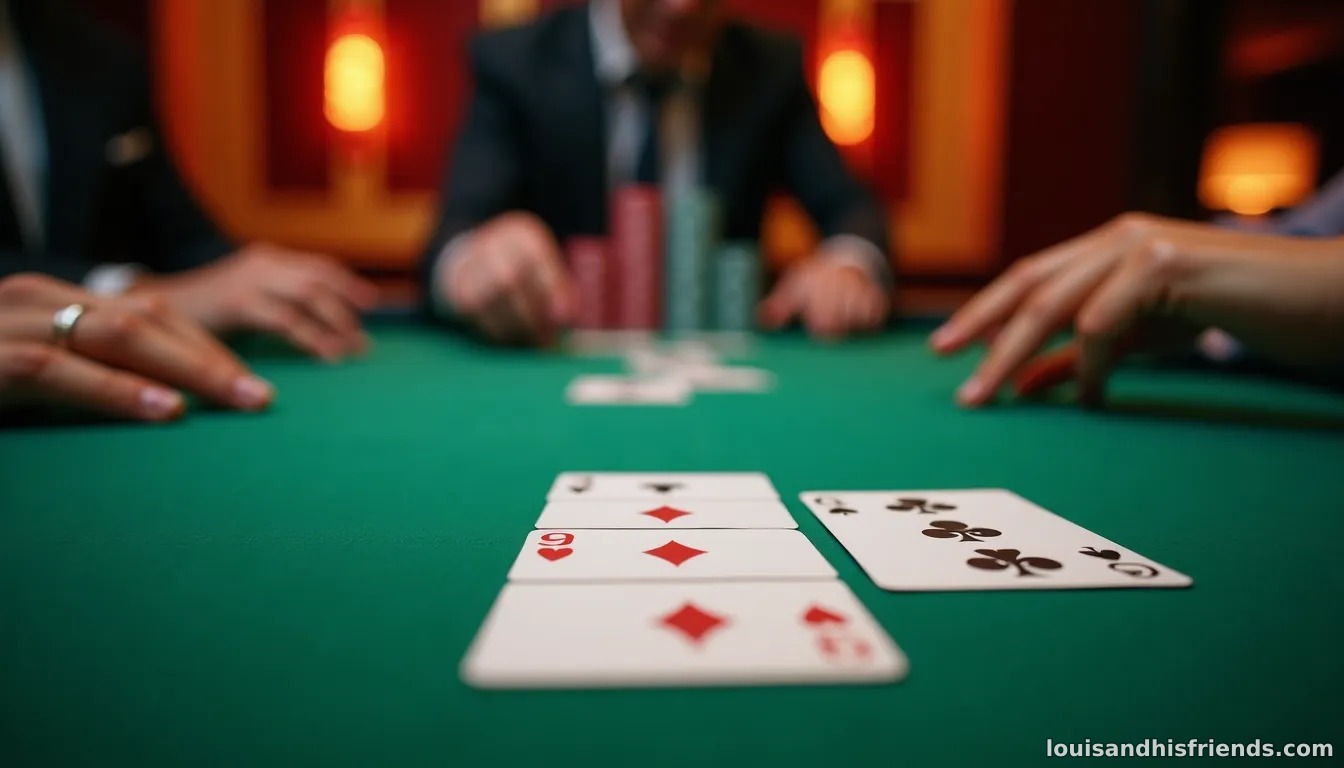
In social Texas Hold'em, where you sit is as important as the cards you hold. Every seat at the table carries a specific name and a built-in advantage or disadvantage that shapes every decision you make. This lesson – part of the Foundations series – breaks down each position, explains why late position is king, and shows you how to adjust your play seat by seat. No practice chips is involved; everything you learn here can be practiced with virtual chips at a free practice table.
Why Position Matters in Social Texas Hold'em
Reading helps, but hands-on repetition sticks. Practice this idea at casual tables on Louis & Friends using free virtual chips — no purchase required for the learning tables.
Position refers to where you sit relative to the dealer button. Because players act clockwise, those who act later in a hand have more information – they see what everyone else does before they have to commit chips. This information edge lets you make better decisions, steal more pots, and lose less when you’re behind. In any social Texas Hold'em game, mastering position is the single biggest skill upgrade you can make.
The Seats: From Button to Blinds
A full nine-handed table uses these standard abbreviations:
- BTN (Button) – The dealer. Acts last post-flop, the most profitable seat.
- SB (Small Blind) – To the dealer’s left. Posts a forced small blind.
- BB (Big Blind) – Next left. Posts the big blind. Acts last pre-flop but first post-flop.
- UTG (Under the Gun) – First to act pre-flop. Toughest seat.
- UTG+1 – Directly left of UTG.
- MP (Middle Position) – Loosely the next two seats; here we call them MP1 and MP2.
- HJ (Hijack) – The seat just before the cutoff.
- CO (Cutoff) – The seat right of the button. A powerful late position.
Each seat forces a different hand-range requirement. Playing the same cards from UTG and the button is a classic beginner mistake.
The Power of the Button
The button is the most desirable seat because you act last on every post-flop street. This lets you build the pot when you have a strong hand, control the size with draws, and abandon the hand cheaply when you miss. In the long run, players win more chips from the button than from any other seat. If you could only play one seat for a session, it would be BTN.
Early Position: Play Tight or Fold
UTG and UTG+1 are under pressure because you must act first without knowing how many opponents will enter the pot. As a rule, open only premium hands from UTG (like big pairs or A-K) and fold everything speculative. You are placing chips into a pot blind, so you need a hand that can survive after the flop even when out of position. Many beginners get into trouble by calling raises from early position with suited connectors – you’ll bleed chips fast that way.
Late Position: Steal the Pot
When the action folds to you in the cutoff or on the button, you can open with a much wider range – including hands like K-9 suited or small pairs. The threat of position forces the blinds to play defensively, so you can often take down the pot with a well-timed raise even when you miss the flop. In social Texas Hold'em with friends, this concept is the first step toward moving from "playing your own cards" to "playing the people."
Worked Example: Playing from the Cutoff
Imagine a casual game around a virtual table. You are in the CO with J♠ T♠. The action folds to you. You place a raise of three times the big blind, putting virtual chips into the middle. The button folds, the small blind folds, but the big blind calls.
The flop comes Q♠ 9♦ 3♣. The big blind checks. You have a gutshot straight draw (any 8 fills your straight) plus two overcards, but no made hand. Because you are in position, you can place a continuation raise of about half the pot. If the big blind missed or holds a weak hand, they will often fold right away. If they call, you still get to see the turn card with position, allowing you to decide whether to continue or slow down.
This simple example shows how the same hand (J-T suited) would be much harder to play from early position – you’d often have to check-fold the flop because you’d be out of position without any real equity.
Common Position Mistakes
- Playing too many hands from UTG: You’ll face raises behind you, and you’ll be forced to act first on every street.
- Ignoring position when calling a raise: If you’re in the blinds and call with a marginal hand, you’re playing out of position for the whole hand.
- Not adjusting opening raise sizes: From late position you can raise smaller, but from early position you need larger raises to thin the crowd.
- Failing to respect the cutoff and button: When you’re in the blinds, assume the late-position raisers have a wide range and adjust your defense accordingly.
Practice Tip: Try It at a Free Table
To internalize these concepts, spend some time at a free practice table where every move uses play chips – there’s no download needed. You can set up a private room with friends using practice chips and deliberately rotate seats each orbit. Pay attention to how your hand-range requirements shift when you move from UTG to the button. You can also practice these ideas in OpenClaw, a social Texas Hold'em browser game with no download, where you’ll see how position dynamically shapes every decision. Over a few sessions, you’ll start to feel why the button is called the most powerful seat at the table.
Casual practice with free virtual chips — solidify what you read above.
Start Practicing